

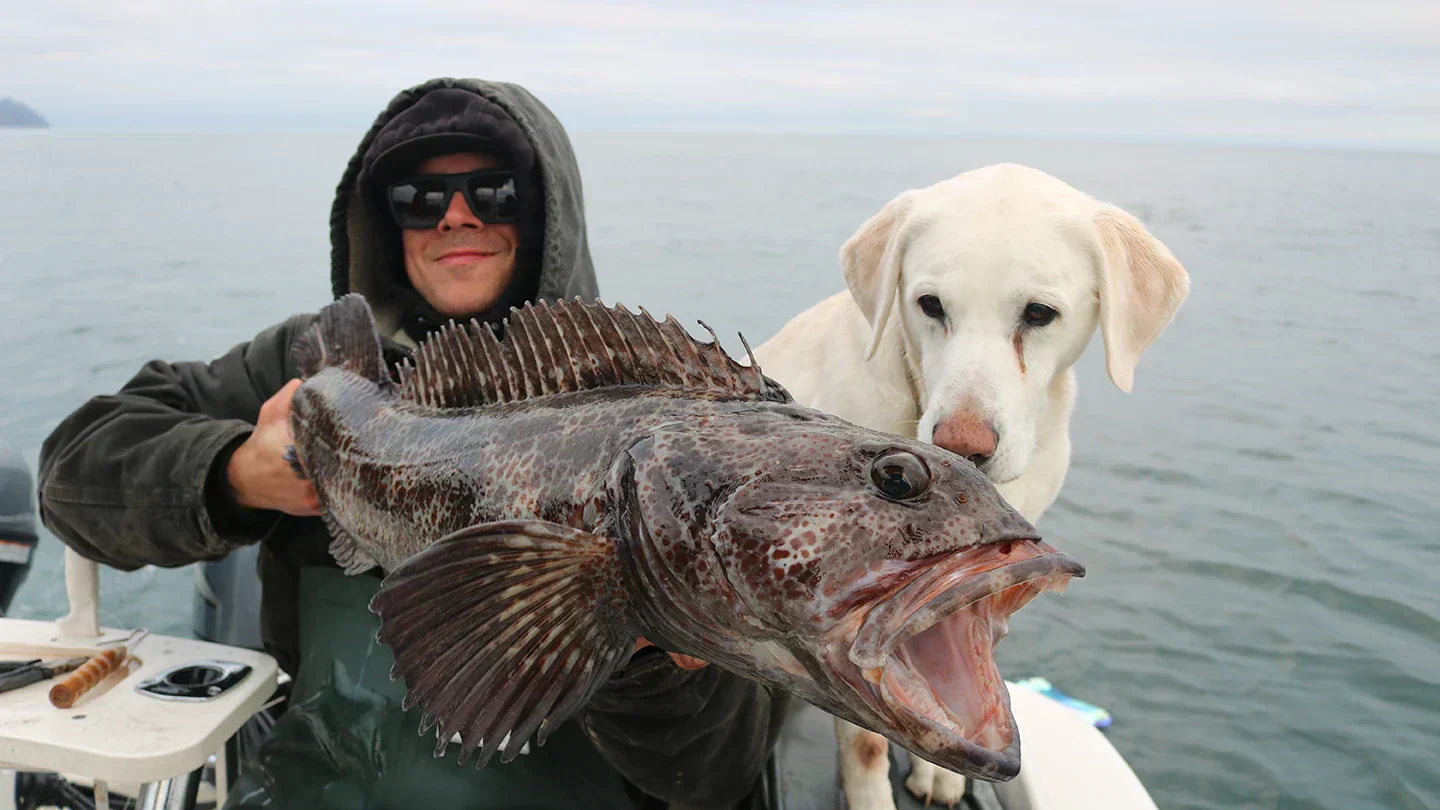
Bottomfishing on the Washington Coast is the first big season opener for our saltwater season, and all four of our ocean marine areas are opening back up for the season on March 14th. Vast expanses of ocean will open up for Lingcod and Rockfish fishing for a 7 month season, and while most of the effort happens from May to September, there are plenty of people that hit the ocean early in the spring during the fair weather days. Each area of Washington's Pacific Ocean hosts some great fishing and unique scenery.
The bottom fish aggregate limit is 9, including up to 2 Lingcod and 7 Rockfish. Cabezon and Greenling are also on the table as part of the limit!
So whether you're a couple hours away from Ilwaco and the mouth of the Columbia River, looking at charter options in Westport, or seeking an adventure on the rugged North Coast from Neah Bay and La Push, rejoice! Washington's saltwater fishing season is about to begin!
Check out the WDFW Halibut & Bottomfish Page for season highlights

Fishing for ocean Lingcod and Rockfish in early spring
March and April offer up a real mix of weather and ocean conditions, we will get severe storms to some of the most perfectly flat ocean conditions, and this can change daily. Most anglers that participate in the spring bottom fish season will keep a close eye on the marine forecast and when a window opens up to hit the ocean safely, they'll jump on the opportunity. But as spring progresses, the fair weather days become more common and expected.
Early season means a fresh chance to fish over Lingcod and Rockfish stocks that haven't seen any angling pressure in months, and all the prime zones produce some great catches. Charter boats out of Neah Bay, La Push, Westport and Ilwaco will offer up some great trips and usually head back to port with boat limits of both Lings and Rockfish.

Marine Area 1 - Mouth of Columbia River, Illwaco
Apart from the deepwater Lingcod fishing that happens later in the season, lots of anglers from both boat and shore fish the North Jetty of the Columbia River. There are a good number of large Black Rockfish and Lings here. Like other river mouths of the Pacific Coast, it is super important to be aware of the bar conditions (current and future) when heading out for the day. Marine Area 1 published regulations and emergency rule changes.

Cape Disappointment near the mouth of the Columbia River - Marine Area 1
Marine Area 2 - Westport
Westport is the most popular bottomfishing port on the Washington Coast, and some major hauls are brought back to the harbor every day that the ocean allows. Near town, the Westport Jetty can offers a close-in option for shore and small boat anglers, and outside the entrance to Grays Harbor, the charter and private boats spread out to countless bottomfish spots. Marine Area 2 published regulations and emergency rule changes.

Marine Area 3 - La Push
A small harbor located just inside the Quillayute River, once you pass the jetties, you're smack dab into the wild Pacific. With vast expanses of Lingcod and Rockfish habitat to explore. Typically a popular choice for mid- to large-sized fishing boats that are equipped to fish in open ocean waters. Marine Area 3 published regulations and emergency rule changes.

James Island at the entrance to La Push - Marine Area 3
Marine Area 4 - Neah Bay
Neah Bay is one of the more remote areas of Washington State, but offers some amazing coastline to explore. Whether your vessel is a 30' offshore boat or a 14' kayak, this is one of the best places for everyone to experience Lingcod and Rockfish fishing. Good fishing for both can be found just outside the harbor, but fishing just gets better and better the further out you go. The area has different regulations inside the Strait of Juan de Fuca versus outside, and depth restrictions for bottomfishing at certain times of the year. Marine Area 4 published regulations and emergency rule changes.

The rugged coastline of Cape Flattery near Neay Bay - Marine Area 4
Seattle Fishing Co. Rockfish & Lingcod Gear
There are a few setups that will help you catch Ocean Rockfish and Lingcod with ease, we have a few rigging diagrams to make things easy. Check out our full line of Lingcod & Rockfish Gear
Deepwater Lingcod Gear
Much of the offshore environment holds that hardpan rocky structure that Lingcod love. During portions of the season, fishing for Lingcod is allowed the offshore zone, and with some areas exceeding 600' in depth, it's deep-sea fishing with heavy gear. The best deepwater areas hold trophy Lingcod. Jigging with heavy jigs is the most common technique.
- Copper Pipe Jigs 16-40 ounces
- Fisherman's Gold Electric Eel Jigs 16-32 ounces
- Gibbs Cod Jigs 16-26 ounces
- Kalin's Big-N Grubs 10" with Lead Jighead 16-32 ounces
Inshore and Nearshore Lingcod Gear
Closer to shore, rockpiles, reefs and the complex and rugged coastline offers good Lingcod fishing in the shallow areas just off the kelp out to 120' or 180', depending on the depth restrictions in the area. We mostly fish with medium heavy rods and jigs up to 12 ounces. Drifting and jigging being the most effective technique.
- Fisherman's Gold Electric Eel Jigs 4-8 ounces
- P-Line Laser Minnow Jigs 3-6 ounces
- Copper Pipe Jigs 8 ounces
- P-Line Twintail Squid 7" & 9" with Lead Jighead 4-12 ounces
Light Tackle Rockfish Gear
Most of the Rockfish fishing is located in the shallows, either inside the kelp, near it, or around rocky structure in 25' to 100'. Light tackle can make this a fun part of the day, and usually jigs from 1 to 3 ounces will perfectly match the size of forage that Rockfish normally prefer.
- Fisherman's Gold Electric Eel Jigs 1-2 ounces
- P-Line Twintail Squid 4.5" with Lead Jighead 1-3 ounces
- Shrimp Flies
- Luhr Jensen Crippled Herring Jigs 1-3 ounces
- P-Line Laser Minnow Jigs 1-2 ounces

Canary Rockfish caught near Neah Bay, Washington


