

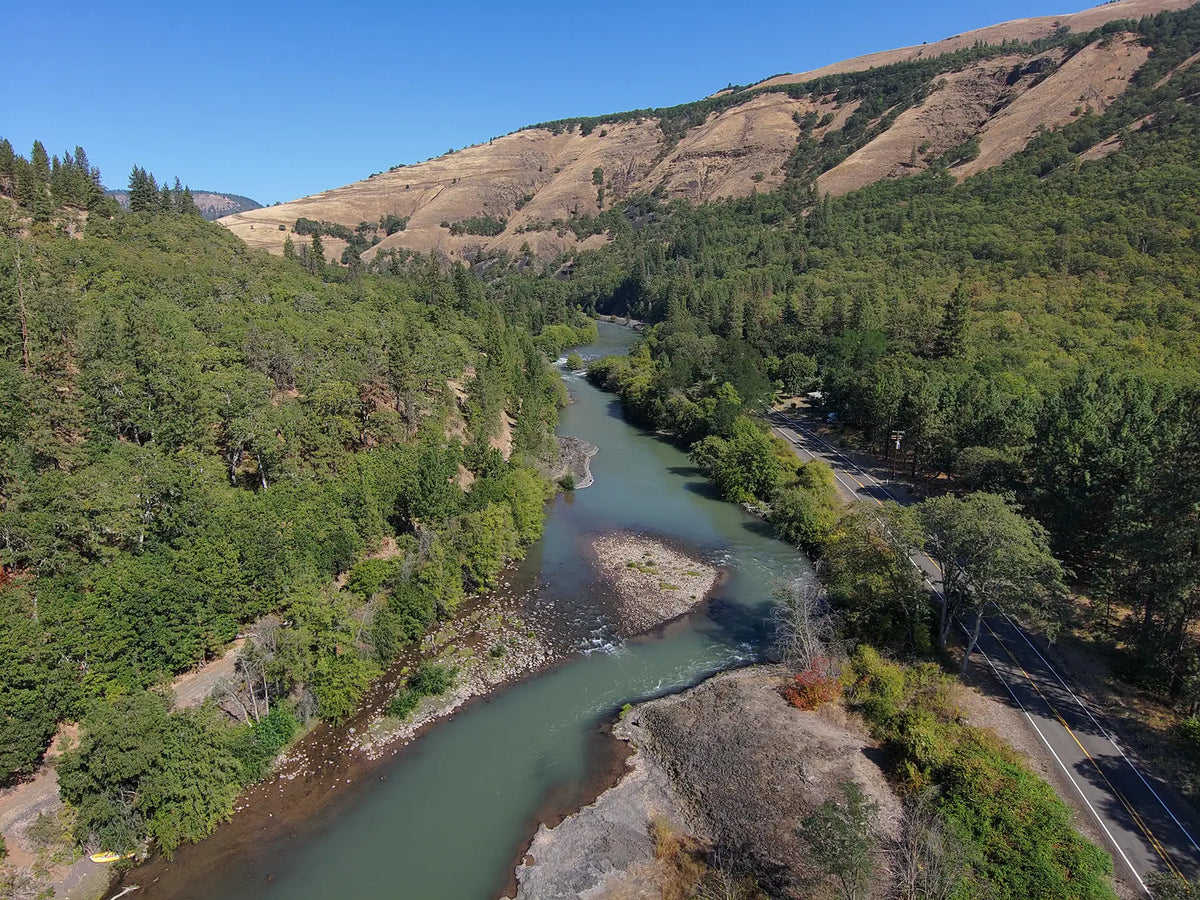
Fishing at the Klickitat River
Tucked into the Columbia River Gorge, the Klickitat is a river worth getting to know, whether you're just starting out or you've been chasing steelhead for years. It's earned a reputation for some of the hardest-fighting summer steelhead and fall Chinook in the state, and while the river has its challenges, that's part of what makes it such a rewarding place to learn and grow as an angler. There's plenty of accessible water for beginners to get their feet wet, and enough of a puzzle to keep seasoned anglers coming back season after season.

The Klickitat is one of our most bank-accessible rivers, great for a weekend of exploration!
Where is the Klickitat River
The Klickitat River begins high on the slopes of Mount Adams and flows roughly 96 miles south through Klickitat County before joining the Columbia River near the small town of Lyle, Washington. It's a glacially fed river, which gives it cold water and strong, healthy runs, but also means it can turn fast and off-color quickly during warm spells or heavy rain. The lower 18 miles or so, from Lyle upstream through the town of Klickitat, are the most accessible, with Highway 142 running alongside the river the whole way. Beyond that, the river climbs into a steep, forested canyon that sees far less pressure and requires more effort to reach.
From Seattle, getting to the Klickitat is a little bit of a trek but through some really cool country: plan on roughly 2.5 to 3 hours, generally down I-5 and then east on Highway 14 along the Columbia River Gorge, or via I-84 on the Oregon side before crossing back over near Lyle. It's one of the longer drives among the rivers Washington anglers regularly target, but the Gorge scenery alone makes the trip worthwhile, and the fishing gives plenty of anglers a reason to make it a regular pilgrimage.
Klickitat River Map
What you can catch in the Klickitat River
The Klickitat's calling card is its summer steelhead run, considered by many longtime anglers to be among the hardest-fighting of any Columbia River tributary, with fish up to 20 pounds turning up in good years. Fall Chinook salmon provide the other headline fishery, arriving as water temperatures drop in late summer and pushing hard into September and October. Coho salmon add to the fall mix, and a smaller spring Chinook run passes through earlier in the year, though it's more tightly managed. Resident rainbow trout are present throughout the system and make a solid backup target when steelhead conditions turn tough, and mountain whitefish round out the lineup as a reliable, often overlooked option. Because the Klickitat plays a significant role in hatchery broodstock collection for the Klickitat Salmon Hatchery, and supports Yakama Nation treaty fisheries, rules here can be detailed and change year to year, so checking current WDFW regulations before any trip is essential.

Klickitat River Fishing Seasons
Spring is a quieter time on the Klickitat for most anglers, with a limited spring Chinook fishery that's often tightly restricted around hatchery broodstock needs. Snowmelt and glacial input tend to keep flows high and the water cold, which can make for tricky conditions. When water conditions are good, it can be a great place to find solitude and some big fish. Float fishing with a bobber and steelhead jig or BNR Soft Bead can be good, as can swinging Little Cleo Spoons, Blue Fox Vibrax Spinners and Steelhead Slammer Spinners.
Summer is when the Klickitat starts to earn its reputation. The main summer steelhead season typically opens around June 1 and runs through the end of November, with fish trickling in through June before things pick up later in the season. Warm weather can push flows and clarity around throughout the summer, since the glacial source reacts quickly to heat, so timing a trip around stable, cool conditions pays off. This is prime season for fly anglers looking to swing flies through the river's classic runs. Blue Fox Vibrax and Steelhead Slammer Spinners are real winners during this time of year, as are bobber and soft beads.
Fall is the Klickitat's marquee season. Chinook salmon push into the river as water temperatures drop in late summer, with the best fishing typically running through September and October, and the lower 15 miles can get genuinely busy when good numbers of fish are around. Summer steelhead numbers peak alongside the salmon run in this same September-to-October window, and the largest, most trophy-class steelhead often show up even later, running into November before the season closes. It's widely considered the best all-around stretch of the year to fish the Klickitat, especially for anglers chasing that classic double shot at salmon and steelhead in the same trip. Boat anglers can pull bait divers with a spin-n-glo and bait, Yakima Mag Lip 3.5 plugs or Brad’s Wigglers. Also try float fishing with a bobber and eggs or cast Blue Fox Vibrax Spinners.
Winter is the off-season for most Klickitat anglers, with the main steelhead fishery closing at the end of November and the river settling into its coldest, highest-water period of the year. Resident trout and mountain whitefish remain available for anglers willing to brave the conditions, but this is generally a season to plan and prep gear rather than fish hard, with most attention shifting to nearby rivers with active winter runs. If you’re in the area and want to wet a line, try casting Roostertail Spinners or swing small Little Cleo Spoons for Rainbows.
Best Fishing Spots on the Klickitat River
The lower stretch from Lyle upstream to the town of Klickitat, paralleled by Highway 142, holds a dozen or so productive runs and is by far the most fished section of the river, with numerous pullouts providing easy road access. Lyle Falls, near the mouth, is a well-known landmark and a popular bank fishing-only access point for both salmon and steelhead as fish stage before heading upstream. Several boat ramps in that middle 18-mile stretch make float trips of almost any length easy to plan, which is part of why this section sees the bulk of the river's angling pressure. Anglers looking for solitude can push further upstream into the canyon water above town, though access gets noticeably harder and more remote the farther up you go.

Fishing on the Klickitat River
The Klickitat is not always a forgiving river, and that difficulty is part of its appeal for the anglers who love it. Cold, fast, and often off-color water means success usually comes down to confidence, clean presentation, and a willingness to keep covering water rather than waiting for perfect conditions. Because the river supports critical salmon broodstock collection and treaty fisheries, regulations can shift during the season, including daily limits, area closures, and access restrictions near the hatchery, so it's worth checking the current WDFW rules and any emergency notices before every trip. Pack for changeable conditions, be ready to adjust your approach as the water clears or clouds, and the Klickitat can reward patient, persistent anglers with some of the best steelhead and salmon fishing in the Gorge.


