

Fishing at the Naselle River
Tucked into the coastal rainforest of Pacific County, the Naselle River offers a fishing experience unlike anything closer to the city. It's a smaller, quieter coastal stream, but it produces some of the brightest, most aggressive winter steelhead in the state, along with a strong fall coho run, all set against a backdrop of misty, moss-draped forest.

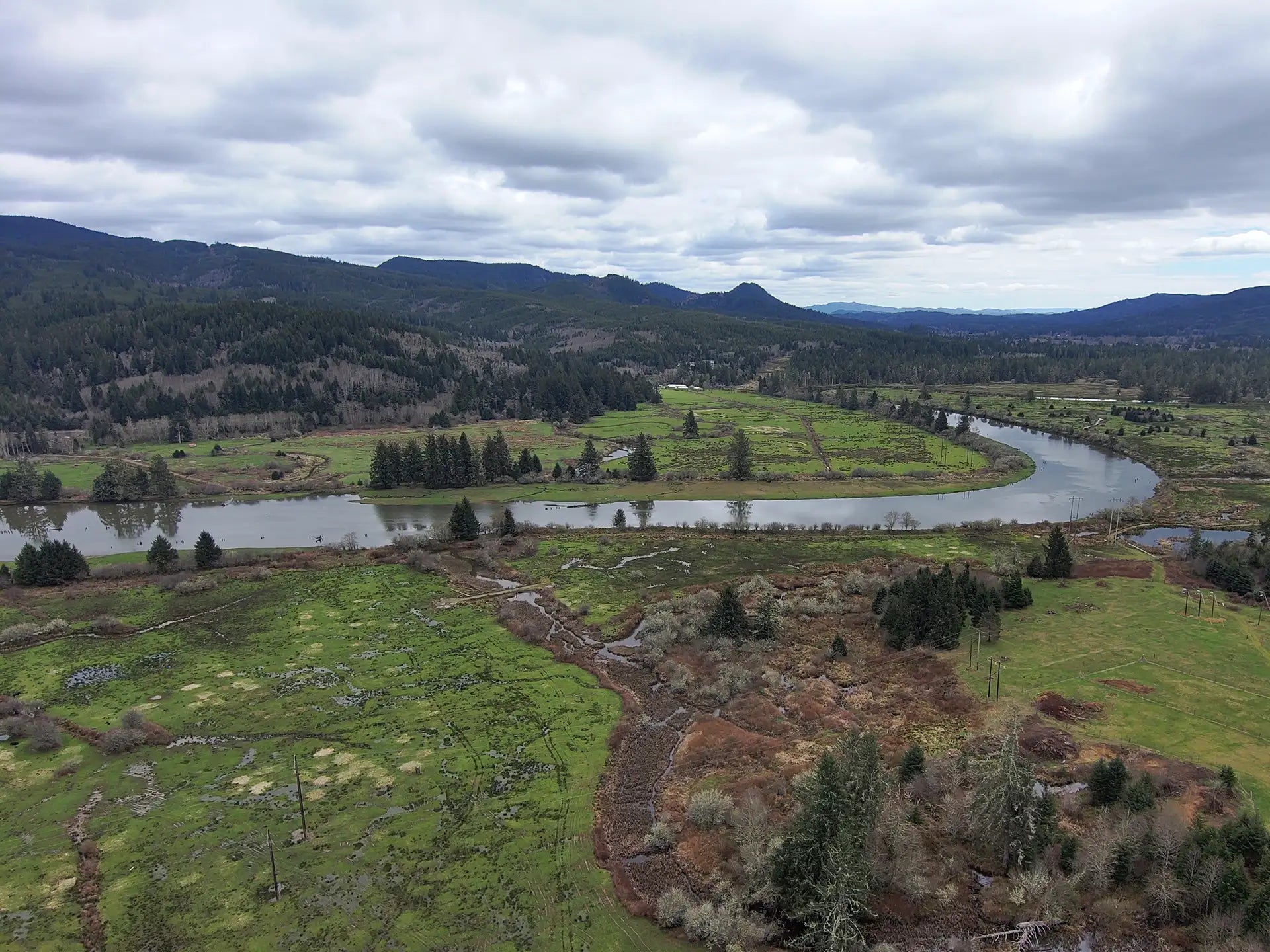
The lower stretch of the Naselle River is broad, marshy and tidal.
Where is the Naselle River
The Naselle River flows through the coastal hills of Pacific County in southwest Washington, emptying into Willapa Bay near the small community of Naselle, not far from the mouth of the Columbia River. It's a coastal system rather than a Columbia tributary, which gives it a distinctly different character from rivers like the Cowlitz or Lewis: smaller, rain-fed, and surrounded by dense, temperate rainforest rather than the drier, more open terrain found further inland. The river and its watershed feel remote and lightly developed, offering a genuine escape for anglers who want scenery and solitude to go along with their fishing.
From Seattle, reaching the Naselle takes typically around 3.5 to 4 hours depending on the route, generally down I-5 before cutting west on Highway 12 or Highway 6 toward Willapa Bay, or via Highway 101 along the coast. It's one of the longer drives among the rivers covered in this series, but for anglers craving a true coastal fishing trip, the payoff in scenery and fish quality is well worth the extra hours behind the wheel.
Naselle River Map
What you can catch in the Naselle River
The Naselle is best known for two things: winter steelhead and fall coho salmon. The winter steelhead run produces chrome-bright, aggressive fish that put up a serious fight in the tea-colored, rain-fed water typical of southwest coastal rivers. Chinook salmon are also present, along with the coho that make the Naselle one of the more productive rivers on the southern Washington coast during the fall season. Because the Naselle empties into Willapa Bay alongside several other coastal systems, including the Nemah, North, and Willapa rivers, it's often grouped together with those rivers in WDFW season announcements, and its runs can behave similarly to its neighbors. As with most coastal Washington rivers, selective gear rules and barbless hook requirements are common, and portions of the river are managed with catch-and-release-only sections, so confirming exactly which regulations apply to the stretch you plan to fish is especially important here.
Naselle River Fishing Seasons
Spring is a quiet season on the Naselle, with the main salmon and steelhead runs having wound down by this point in the year. Flows are typically still elevated from winter rains, and the coastal rainforest setting means the river can stay high and off-color longer than inland systems. Most anglers plan their trips for later in the year, although the river opener around Memorial Day can provide some decent trout fishing if you’re already in the area. Cast and retrieve small spinners like Roostertails and Steelhead Slammers.
Summer remains a slower period on the Naselle, without the strong salmon or steelhead presence that defines the rest of the year. Lower, clearer flows during the drier months can make for pleasant scouting trips, and it's a good time to get familiar with access points and river conditions before the fall run arrives. Sea run Cutthroat can be found in the river.
Fall is when the Naselle comes alive, with a strong coho run pushing through in October and November. This is considered one of the most reliable stretches of the year on the river, drawing anglers to the productive water near the hatchery and throughout the lower system. Chinook fishing opportunities are also available on the southern coast during this window, generally running into late January in most years, making fall through early winter the most consistently productive period on the Naselle. Float fishing with bobbers and cured salmon roe is a standard technique here for salmon, actually required in certain areas to limit snagging. Twitching jigs and retrieving Blue Fox Spinners in the lower river can be really effective when schools of salmon start pushing into the lower river with the tide.
Winter belongs to steelhead. The Naselle's winter run typically fishes best from January through March, producing chrome-bright, hard-fighting fish in the misty, forested water that gives this river its distinct coastal character. Rain-swollen flows are common this time of year, so keeping an eye on river levels before heading out is essential, but when conditions align, winter is widely considered the signature season on the Naselle and the main draw for anglers willing to make the long drive from the Seattle area. Float fishing with bobbers and soft beads or steelhead jigs is a pretty good way to catch Steelhead here.

Best Fishing Spots on the Naselle River
The water around the Naselle Hatchery, including the attraction channel and the stretch nearby, is one of the most productive and well-known areas on the river, particularly for steelhead staging near the facility, though seasonal closures apply in the immediate vicinity of the attraction channel. The primary public bank access is the WDFW water access site at the Highway 4 bridge, about 1.3 miles east of Naselle, where a parking area (Discover Pass required) leads to a roughly 1.25-mile easement trail running downstream along the north bank. Anglers report the stretch from below the boat launch down to tidewater as especially productive during the fall coho run. Upriver, the water between the Bighill Bridge and the Crown Mainline (Salme) Bridge offers another actively fished stretch for anglers looking to spread out. Much of the river runs through private timberland, so anglers should stay within the posted public easement — typically a narrow 25-foot strip along the water — and pay attention to boundary markers, especially near catch-and-release-only sections close to the hatchery. Because the Naselle is a smaller system than the big Columbia tributaries, bank access along the main stem and near road crossings is the most practical way to fish it, rather than long float trips.

Around the town of Naselle, the river is slow moving and a great zone to target Fall Salmon.
Fishing on the Naselle River
The Naselle is grouped with several other Willapa Bay-area rivers under WDFW's coastal fishing regulations, and rules here can be detailed, including specific closures, catch-and-release zones near the hatchery, and required selective gear or barbless hooks depending on the time of year. Because regulations can change with in-season run updates, checking the current WDFW regulations pamphlet or the Fish Washington app before every trip is essential, especially given how tightly some stretches near the hatchery are managed. Pack for wet, rainy conditions and elevated flows, especially in winter, and be ready for a river that rewards patience with some of the most scenic, uncrowded steelhead and salmon fishing on the Washington coast.


