

Fishing at the Snoqualmie River
Anchored by one of the most photographed waterfalls in the state, the Snoqualmie River offers a genuinely different fishing experience above and below the falls. Below, it's a classic lowland salmon and steelhead river close to Seattle; above, it's quiet native trout water in the shadow of the Cascades. Few rivers this close to the city offer that kind of range in a single system.
Where is the Snoqualmie River
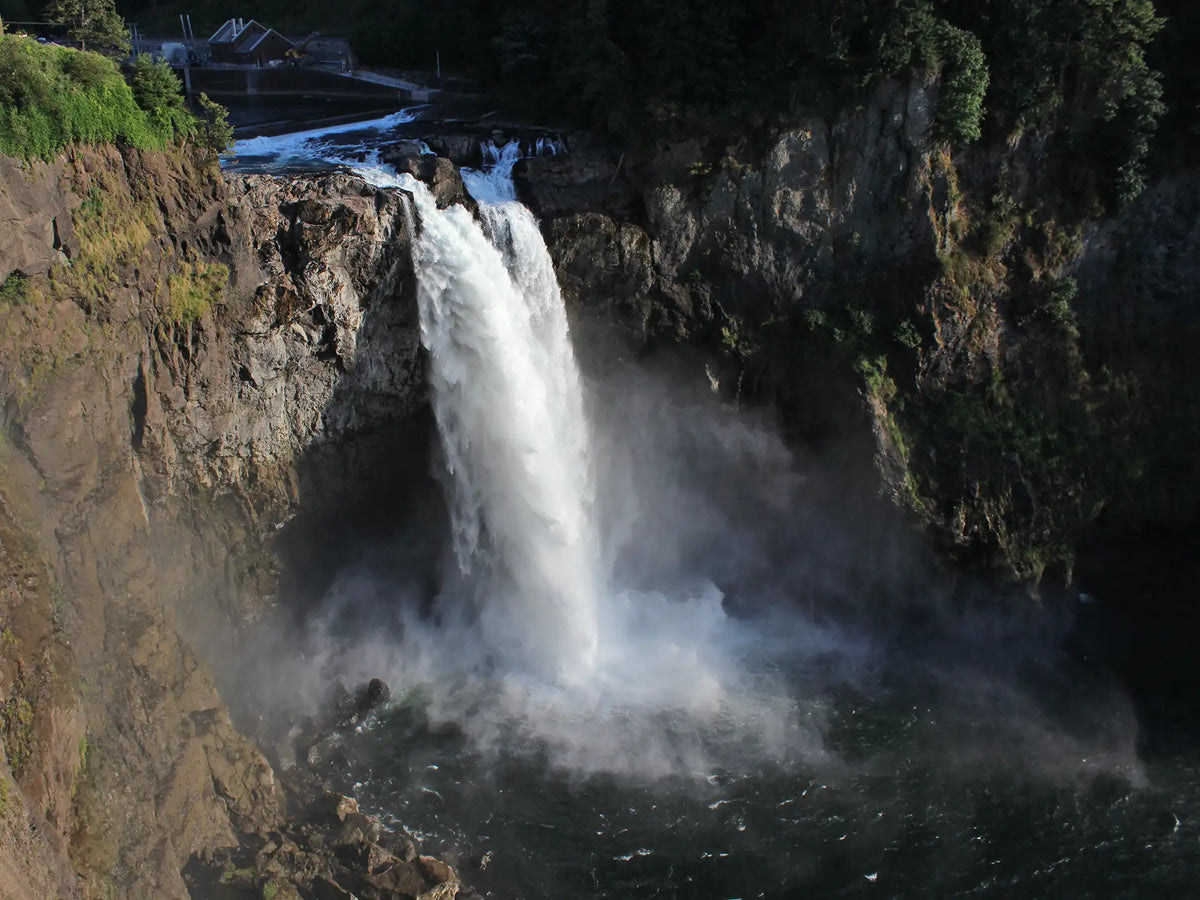
The Snoqualmie River flows out of the central Cascade Mountains, formed by its South, Middle, and North Forks, which join to create the mainstem near the town of Snoqualmie. From there, the river plunges over the roughly 268-foot Snoqualmie Falls, a natural barrier that blocks salmon and steelhead from reaching the water above, before continuing through the towns of Fall City, Carnation, and Duvall and eventually joining the Skykomish River to form the Snohomish. Below the falls, the river has three distinct personalities: a heavily diked, slow-moving lower stretch through farmland best fished by boat, a faster, more riffled middle section from Carnation up to the falls that's popular with fly anglers, and the water immediately below the falls itself, including a pool accessible by a short, careful scramble along the rocks.
From Seattle, the Snoqualmie is one of the closest rivers in this guide series, typically just 35 to 45 minutes via I-90 to Fall City or Highway 202 through Carnation and Duvall. That short drive, combined with good public access throughout the lower river, makes the Snoqualmie an easy option for an after-work outing or a relaxed weekend morning close to home.
Snoqualmie River Map
What you can catch in the Snoqualmie River
Below the falls, the Snoqualmie hosts runs of both winter and summer steelhead along with four species of Pacific salmon. Coho and pink salmon, the latter in odd-numbered years, predominate, with smaller numbers of Chinook and chum joining the mix. The river's sea-run cutthroat fishery is a particular highlight, with fish available from August until high water arrives in late fall, and September is often cited as a month when an angler could realistically catch several different species in a single outing. Winter steelhead build through the wet season, though the river's higher, often murky flows make it less fly-friendly than some neighboring streams. Above the falls, the character changes entirely: with no anadromous fish able to pass the barrier, the three forks instead support native rainbow trout and westslope cutthroat trout in clear, forested mountain water, open year-round and offering some of the most consistent trout fishing in the system, particularly on the Middle Fork. Because wild Chinook conservation concerns have led to significant restrictions or closures on portions of the lower Snoqualmie in recent years, checking current WDFW rules before targeting salmon here is essential.

Snoqualmie River Fishing Seasons
Spring is generally quiet below the falls, as the fishing season is generally closed to protect spawning wild steelhead. Above the falls, the forks remain open year-round, making spring a good time to fish for native rainbow and cutthroat trout in clearer, less crowded water while the lower river settles.
Summer brings sea-run cutthroat trout back into the picture below the falls, typically starting in August, alongside the first pink salmon in odd-numbered years and early coho beginning their ascent. Above the falls, the forks continue to offer reliable trout fishing throughout the warmer months, with the Middle Fork generally providing the most consistent action thanks to its year-round access. Small lures like a Roostertail Spinner or Kastmaster Spoon will be really effective in the upper reaches of the Snoqualmie.
Fall is the Snoqualmie's busiest season below the falls. Coho push hard through the main river starting in September, with the best fishing generally running through November as fish move toward tributaries like the Raging River, Tolt River and Tokul Creek. Chinook are present but highly protected here. Pink salmon add a big push in odd-numbered years, and by late September an angler working the river might reasonably hook cutthroat, coho, and pinks all in the same day. This transitional season, especially after the first fall rains or a cold snap, is widely considered the most exciting stretch of the year on the river. Spinners are a great all-purpose lure for this time of year on the Snoqualmie, try Roostertail Spinners, Steelhead Slammers and Blue Fox Vibrax Spinners. When there is a directed coho season, twitching jigs and Brad's Wigglers are also very effective.
Winter shifts the focus to steelhead, with the run typically building starting in December and peaking through January, February, and March. Anglers commonly use float fishing or side-drifting techniques, targeting slower water behind structure given the river's higher winter flows. Because the Snoqualmie can run high and off-color after storms, and regulations are subject to emergency closures that shift year to year, checking current WDFW rules and river conditions before heading out is especially important this time of year. Bobber fishing with steelhead jigs is a popular method to target steelhead, but drift fishing with corkies and yarn are a close second.

Chinook Bend natural area near Carnation, Washington.
Best Fishing Spots on the Snoqualmie River
Fall City offers a well-known riverfront park with access to a productive gravel bar, and nearby David Powell Road parallels the river with multiple pullouts for walk-in access. Downstream from Fall City, Neal Road provides multiple access points. The stretch from the mouth of the Raging River down to Fall City provides another reliable gravel bar for bank anglers. In Carnation, Tolt MacDonald Park offers good trout and salmon access right in town. Downstream, McCormick Park in Duvall is a favorite for coho and in late September through early November, known for being quiet with plenty of bank access. Near the falls, the water around the Tokul Creek confluence is a popular access point tied to the nearby hatchery, slightly below is Plum Boat Launch, which also provides bank access and a trail that takes you up to the famous Cable Hole. Above the falls, all three forks offer walk-in access to native trout water, with the Middle Fork generally considered the most consistently productive.

The Snoqualmie River is a slow and meandering river through much of its course, lots of good salmon holding water!
Fishing on the Snoqualmie River
Because the Snoqualmie is developed jointly by WDFW and tribal co-managers, and because wild Chinook recovery is a genuine priority in this basin, regulations can include specific gear restrictions and open or closed zones that shift from year to year, particularly near the confluence with the Skykomish and around hatchery tributaries. In recent seasons, the lower river has seen significant restrictions or full closures tied to weak wild Chinook forecasts, so this is not a river to plan a trip on without checking the very latest WDFW rules first. Anti-snagging rules and specific retention limits are common even when the river is open, so confirming current regulations before keeping any fish is essential. With its short drive from Seattle, varied water, and genuine range from lowland salmon fishing to alpine trout streams, the Snoqualmie offers one of the most accessible and diverse fishing experiences in the region, provided you stay current on what's actually open.


