

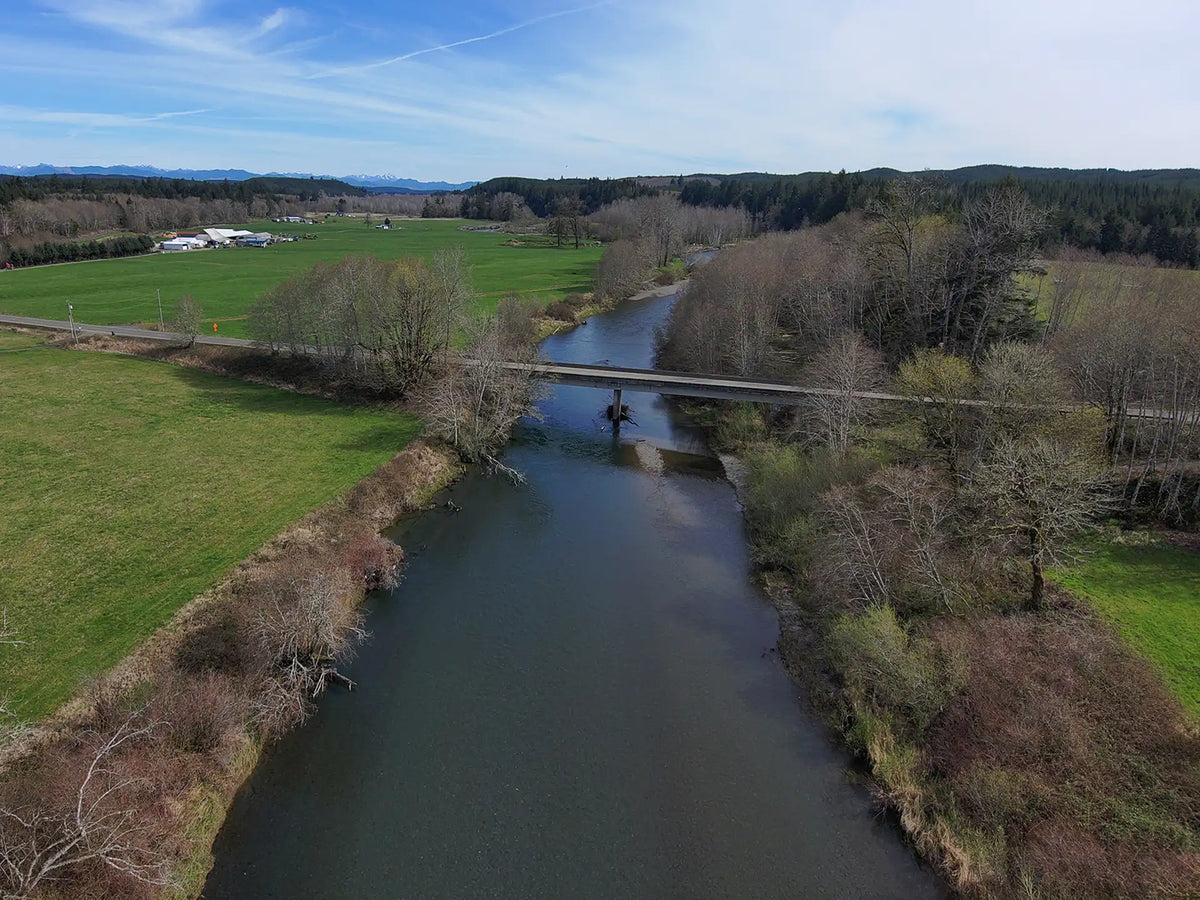
Fishing at the Wynoochee River
The Wynoochee River is a genuine multi-species fishery packed into one clear, dam-controlled stream. Winter steelhead headline the calendar with distinct hatchery and wild runs stacking up from December through March, while summer steelhead fill the gap between other rivers' early and late returns. Fall brings a strong coho push through October and November, followed closely by a substantial chum run that carries into December, and resident cutthroat trout round out the river year-round for anglers looking for something a little different between salmon and steelhead seasons.
Where is the Wynoochee River
The Wynoochee River begins on the south slopes of the Olympic Mountains within Olympic National Park, flowing roughly 60 miles south through Grays Harbor County before joining the Chehalis River near Montesano. The Wynoochee Dam gives the river clear, cold, and relatively stable flows compared to many rain-driven coastal streams, which is a big part of why it fishes consistently even after storms roll through. The surrounding terrain is remote and forested, offering a wilder fishing experience than urban Puget Sound rivers, with the small to medium-sized stream well suited to both drift boat floats and bank fishing.
From Seattle, the Wynoochee is roughly 2 to 2.5 hours south, generally down I-5 and then west on Highway 8 and Highway 12 toward Montesano, before turning north on Wynoochee Valley Road toward the river and hatchery. That puts it in the same general drive-time range as the rest of the Chehalis basin's tributaries, making it a realistic weekend trip, and an easy add-on for anglers already planning to fish the nearby Satsop or Chehalis.
Wynoochee River Map
What you can catch in the Wynoochee River
The Wynoochee is best known for its winter and summer steelhead fishing, supported by a local hatchery that plants around 170,000 winter steelhead smolts and roughly 60,000 summer-run juveniles each year. Hatchery fish are identifiable by their clipped, healed adipose fin and are legal to keep, while wild steelhead, seen in increasing numbers in recent years, must be released immediately. Coho salmon provide a strong fall run beginning in late September and peaking through October and November, and a substantial chum run enters the lower river in October and continues into December, offering a late-season option for anglers willing to fish heavier gear. Chinook are present but in smaller numbers than on nearby rivers like the Humptulips, so the Wynoochee is better thought of as a steelhead river with a solid coho and chum fishery on the side than as a premier Chinook destination. Because both wild steelhead and Chinook face ongoing conservation concerns here, and the river includes a fish trap and hatchery weir as part of its management, checking current WDFW rules before keeping anything is essential.

Known for its summer and winter steelhead fisheries, the Wynoochee is a smaller river with plenty of pools, runs and pocket water to explore.
Wynoochee River Fishing Seasons
Spring on the Wynoochee wraps up the tail end of the winter steelhead run, with fishing sometimes extending into this period depending on that year's regulations and run strength. Tacoma Power also shuts down the dam's hydroelectric plant for a stretch each spring to let salmon and steelhead smolts pass safely downstream, a reminder of how closely this river is managed. It's a good time to check current season dates before planning a trip, since steelhead retention rules can shift from year to year based on natural-origin returns.
Summer brings the Wynoochee's other steelhead run into play, with the river opening the first Saturday in June and offering summer steelhead fishing that helps fill the gap between other rivers' early and late winter runs. Stable, dam-regulated flows make this a comfortable season for float trips and wading, and the clear, cold water typical of this river holds up well even as other coastal streams warm and drop through the summer months. Float fishing with bobbers and steelhead jigs or soft beads is the primary tactic, but Steelhead Slammer Spinners are a great option as well.
Fall is when coho take over. The run gets going in earnest in late September and peaks through October and November, with many fish holding in the lower river before being trapped at the hatchery weir. Casting Blue Fox Vibrax Spinners or twitching jigs catch most of the coho in this system, but bobber and bait is another solid option. A significant chum run follows close behind starting in October and running into December, and it's not unusual to still find lingering coho into the following February while fishing for steelhead, even though coho retention closes earlier in the season. For chum, float fishing with a prawn-tipped 1/4 ounce steelhead jig is best (cerise, hot pink, purple in color). Popular access points near Black Creek and Old White Bridge see the bulk of the fall traffic.
Winter is prime time for the Wynoochee's signature fishery. The "A" run, made up mostly of hatchery fish, enters in December and peaks in late January, while the "B" run of mostly wild steelhead enters in January and peaks in late February, giving anglers a shot at both hatchery and wild fish through much of the season. January through March is typically considered the best stretch for trophy-class steelhead. Float fishing with soft beads or steelhead jigs is a great choice, and in higher winter flows pulling plugs like Mag Lip 3.5’s or Brad’s Wigglers will catch a bunch of steelhead. Early when the river is mostly full of hatchery fish, back-trolling a bait diver with a spin-n-glo and sand shrimp is another deadly technique. Because natural-origin winter steelhead have missed spawning escapement targets in recent years, conservation rules can tighten or shift with little notice, so checking WDFW's current emergency rules before a winter trip is essential rather than optional.

Best Fishing Spots on the Wynoochee River
Black Creek and the nearby Crossover access, a rough dirt launch with limited bank access under a bridge, are among the most popular put-ins and bank spots on the river. Old White Bridge, a bit further along, marks the general upriver boundary for salmon retention, since Chinook can't be kept above this point, and it offers a gravel bar well suited to bank fishing. Further upstream, the 7400 Road bridge launch, also known as Bob's Bridge, gives drift boat and pontoon anglers access to the upper river thanks to a renewed agreement between WDFW and the timber company managing that land. The water around the Twin Bridges County Park is another key access point and a good bet for salmon staging in the lower river.

Fishing on the Wynoochee River
Regulations on the Wynoochee are genuinely layered, shaped by the presence of the fish trap and hatchery weir, wild steelhead conservation zones, and tribal co-management, all of which influence whether the river is open, where fish may be retained, and whether areas near the dam or hatchery are accessible at any given time. Because natural-origin steelhead returns have struggled in recent years, don't assume last season's rules still apply, and always check WDFW's current emergency rules page before heading out. Flows are often too low for jet sleds above White Bridge, so most boaters put in at Black Creek instead, and a low-head dam just upstream from Black Creek blocks jet sleds from going any further. With its clear, cold, dam-regulated water and reliable winter steelhead run, the Wynoochee remains one of the more dependable options in the Chehalis basin, especially when heavy rain has other rivers blown out.


