

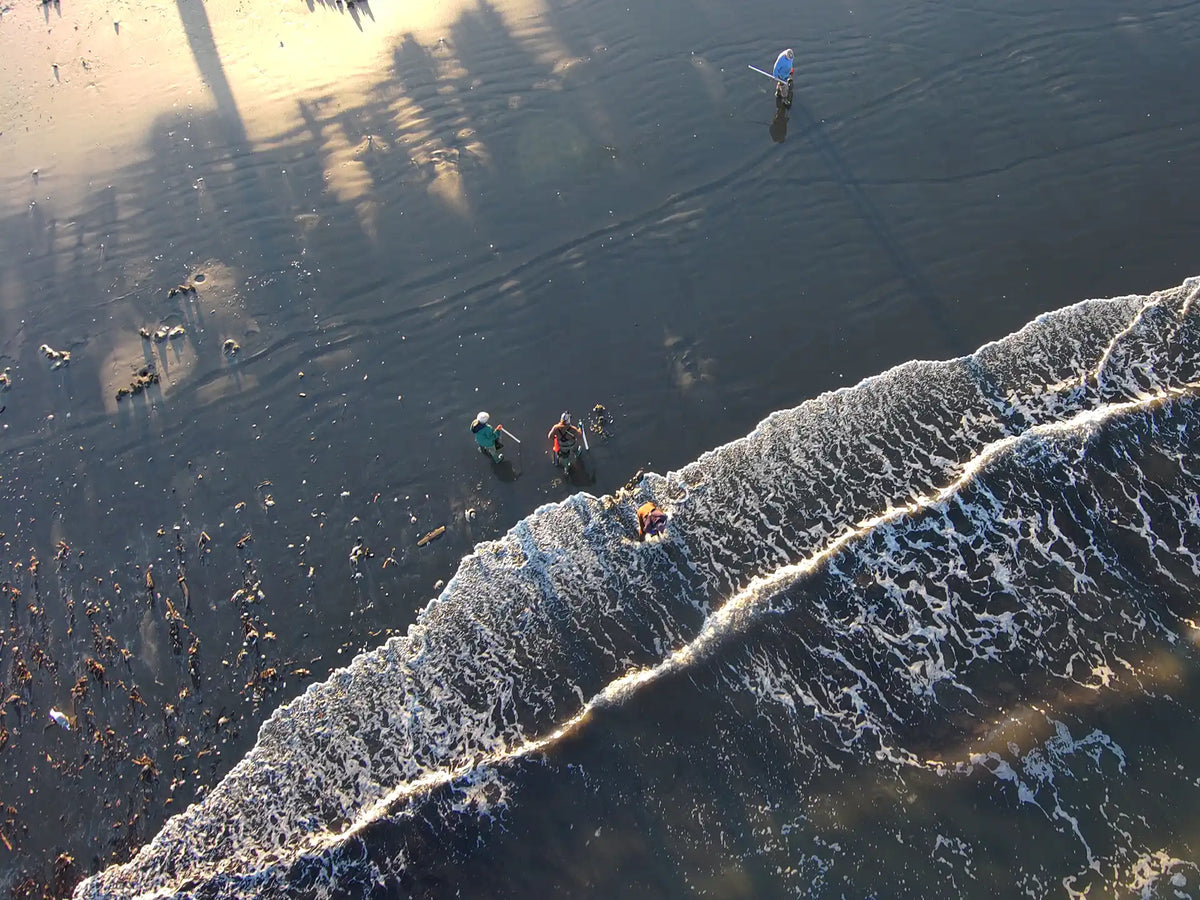
Razor Clamming at Copalis Beaches
Anchored by the resort town of Ocean Shores, Copalis Beach is one of Washington's four classic razor clam beaches and one of the most accessible on the entire coast. With six maintained public access points and a full slate of nearby amenities, it's an easy pick for a first razor clamming trip, or a reliable go-to for anyone who's done it before. Between the hotels, restaurants, and other coastal attractions clustered around Ocean Shores, it's also one of the easiest beaches to turn into a full weekend getaway rather than just a quick dig.

Where are the Copalis Beaches
Copalis Beach extends along the Pacific coast from the north jetty at the mouth of Grays Harbor north to the Copalis River, in Grays Harbor County. It's a wide, sandy stretch that runs through Ocean Shores, Ocean City, and Oyhut, giving it a more developed, resort-town feel than some of the more remote razor clam beaches further north, like Mocrocks. Ocean Shores itself offers hotels, restaurants, a casino, and plenty of other coastal activities, making Copalis a natural choice for folks who want their clamming trip paired with a full weekend getaway.
From Seattle, plan on roughly 2.5 to 3 hours to reach Copalis Beach, generally down I-5 and then west on Highway 8 and Highway 12 toward Aberdeen, before heading north through Hoquiam onto Highway 109 toward Ocean Shores and Ocean City. It's a similar drive time to Grays Harbor and the Humptulips River, and the abundance of lodging and dining in Ocean Shores makes it one of the more convenient coastal beaches to turn into an overnight trip rather than a rushed day out.

Copalis Beach Map
Best Copalis Beach Access Points
Copalis has six maintained public access points, more than any of the other coastal razor clam beaches, all reached off Highway 109 or streets within Ocean Shores. 2nd Street in Ocean City and the terminus of Highway 115 in Oyhut cover the beach's southern stretch near the mouth of Grays Harbor. Within Ocean Shores itself, Chance A La Mer, Pacific Avenue, Pacific Boulevard, Ocean Lake Way, and Tarus Street all provide additional entry points, giving diggers a lot of flexibility to spread out along the beach rather than concentrating at a single approach. Note that a quarter-mile razor clam reserve, closed to all harvesting, sits just south of the Ocean City approach at 2nd Avenue, so pay attention to posted markers in that stretch.

Spring clamming season brings great weather and daylight digs!
Copalis Clamming Seasons and Rules
Razor clam season on the Washington coast generally runs from early fall through late spring, with WDFW announcing tentative digging dates a few weeks to a few months ahead of time, and final approval for each specific date typically coming just a few days to a week out, based on marine toxin testing. Copalis and Mocrocks are not open on every date within a digging series, since WDFW alternates which beaches are open on which days, so always confirm which beach is open before making the drive; a scheduled opening can occasionally change on short notice if new biotoxin results come back, which can be frustrating for visitors planning around a specific date. All diggers age 16 or older need a valid Washington shellfish license for the current license year, which runs April 1 through March 31, purchasable online through WDFW, via the MyWDFW mobile app, or from statewide license dealers; buying one before arriving at the coast is strongly recommended. The daily limit is 15 clams per digger, and every digger must keep the first 15 clams they dig regardless of size or condition, so nothing dug can be tossed back once it's out of the sand. Each digger's clams must be kept in a separate container. Both WDFW season approval and current Washington Department of Health guidance on domoic acid, a naturally occurring marine toxin, need to align before a beach is actually safe and legal to dig. WDFW Razor Clam Seasons and Beaches
How to Dig Razor Clams
At low tide, look for a "show," the small dimple, dome, or keyhole-shaped indentation in the wet sand that reveals a clam sitting just below the surface. Razor clams sense vibration and dig down fast once disturbed, so a light footstep and a quick dig just beside the show, rather than stomping around or digging straight down on top of it, gives you the best shot at bringing one up intact. Many diggers prefer a clam gun, a metal or PVC tube pushed straight down around the show and pulled back out to bring up a core of sand with the clam inside, since it's gentler on the clam and easier on the back than repeated shovel digging, especially over a full session.

Sunset on the Washington Coast, and a fresh set of tides push in at the end of another successful dig.
Gear You Need for Digging Razor Clams
At a minimum, bring a valid shellfish license, a shovel or clam gun, and a bucket or mesh bag to hold your catch, keeping each digger's clams separated as required. Waterproof, grippy gloves make handling a sandy shovel handle easier, and waterproof rubber boots or hip and chest waders are worth having given how much time you'll spend standing in wet sand. Coastal weather can turn quickly, so layers, a warm hat, and a rain shell are smart additions, and a headlamp or flashlight is essential for the evening low-tide digs common earlier in the season. Because Ocean Shores has a range of outdoor and sporting goods shops, Copalis is also one of the easier beaches to pick up last-minute gear if you arrive without everything you need.
Driving on the Beach
Vehicles are permitted on much of Copalis Beach, but Washington law requires drivers to stay on the hard-packed sand near the high tide line rather than the softer, dry sand closer to the dunes. When in doubt, following existing tire tracks is the safest bet. The posted speed limit on the beach is 25 mph, and vehicles should only enter and exit at designated public access points. Because Copalis sees heavier traffic than some of the more remote coastal beaches, thanks to its proximity to Ocean Shores, staying alert for pedestrians and other vehicles is especially important here. Violating beach driving laws can result in fines, with steeper penalties for incidents involving protected wildlife such as nesting snowy plovers, so watch for posted closures around sensitive habitat.
Other Clamming Info
Ocean Shores hosts an annual Razor Clam Festival timed around spring digging series, adding a festive, community feel to a Copalis trip that's harder to find at more remote beaches. Because the town offers so much lodging, dining, and other coastal activities, from a casino to charter fishing, Copalis works well as an anchor for a full weekend rather than a quick in-and-out dig. As always, razor clam populations and digging opportunity can vary meaningfully from year to year based on WDFW's summer population assessments, so checking the current razor clam webpage before planning a trip is the best way to know both what's open and how much opportunity that season actually offers.
Check out our other Washington Razor Clam Beaches: Long Beach, Mocrocks and Twin Harbors.


