

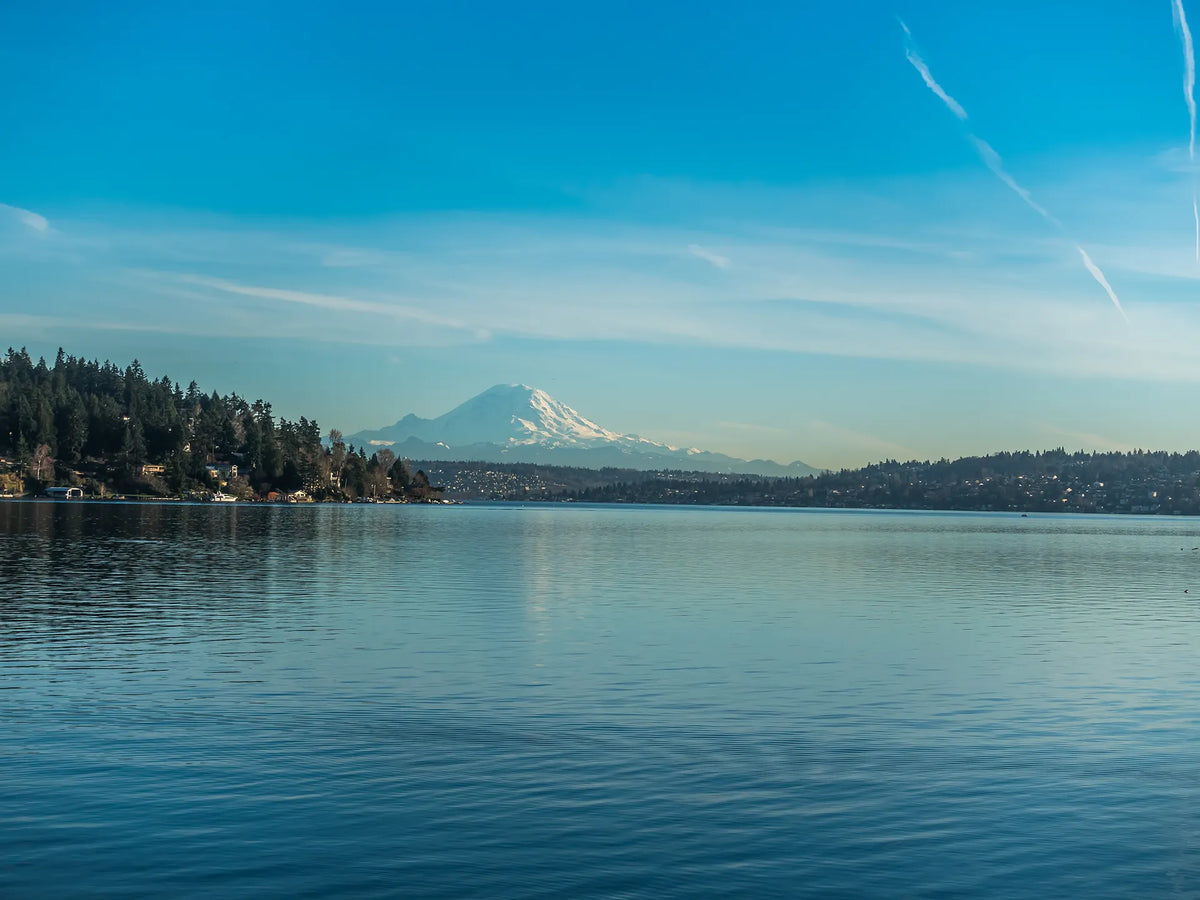
Fishing on Lake Washington near Seattle, Bellevue & Renton
Stretching 22 miles between Seattle and Bellevue, Lake Washington is the rare fishery that delivers genuine variety without ever leaving the city. Bass, trout, crappie, perch, and a real shot at coho salmon and kokanee all share the same water, making this one of the most accessible and rewarding lakes in the entire region. With dozens of public access points ringing the shoreline and a connection to Puget Sound through the Ballard Locks, it offers a level of variety and convenience that few urban lakes anywhere in the country can match. A true year-round fishing gem!
Where is Lake Washington?
Lake Washington is the second-largest natural lake in the state, forming the eastern boundary of Seattle and separating the city from Bellevue, Kirkland, and Mercer Island. At roughly 22,000 acres, it's a genuinely large body of water surrounded by dense urban development, with the Cascade foothills visible in the distance and Mount Rainier occasionally putting in an appearance on a clear day. The lake connects to Puget Sound through the Ballard Locks, which allows salmon to migrate in from saltwater, and to Lake Sammamish via the Sammamish River, giving it a genuinely connected, dynamic ecosystem rather than an isolated body of water.
Because Lake Washington sits within Seattle's city limits and along the shorelines of Bellevue, Kirkland, and Renton, it's about as close to home as fishing gets for most anglers in the region, with public access points scattered throughout, including Seward Park, Magnuson Park, Madison Park, and Mount Baker Beach on the Seattle side, and Houghton Beach Park and Juanita Bay Park on the Eastside.
Lake Washington Map

Roostertail Spinners
One of the most effective trout spinners available. Perfect for casting to trout in lakes across the Pacific Northwest.
SHOP NOWWhat You Can Catch in Lake Washington
Lake Washington's principal game fish include coastal cutthroat trout, largemouth bass, smallmouth bass, yellow perch, and black crappie, alongside real opportunities for coho, and sockeye salmon depending on the strength of that year's returning runs. Kokanee, essentially landlocked sockeye salmon that spend their entire lives in freshwater, have rebounded strongly in recent years and provide another popular target. Because Lake Washington sees elevated PCB levels in some of its fish, Washington health advisories recommend limiting cutthroat trout consumption, generally no more than one meal a month for trout over 12 inches, so anglers planning to eat their catch should check current health guidance. Zone-fishing closures exist along the floating bridges, and a minimum size regulation protects juvenile trout in spring, so reviewing current WDFW rules before keeping anything is always worthwhile.
Lake Washington Fishing Seasons
Smallmouth Bass: Smallmouth bass fishing is available year-round but really picks up from April through September or October, with May and June considered peak months and some of the best smallmouth fishing found anywhere in the state; rocky rip-rap, points, and rock piles holding crawfish are prime areas, fished with spinnerbaits, crankbaits, and tube baits in shallow water, or drop-shot rigs and jigs on deeper structure in winter.
Largemouth Bass: Largemouth bass share a similar season to smallmouth, available year-round with the best fishing from spring through fall; they tend to favor grassy cover and can be caught on soft stickbaits, bass jigs, topwater lures, and spinnerbaits worked around vegetation and docks.
Cutthroat Trout: Coastal cutthroat trout support a year-round fishery in Lake Washington, identifiable by the red slash marks under their jaw; most fish run 7 to 9 inches, though larger specimens are possible, and anglers planning to eat their catch should be mindful of current fish consumption advisories tied to PCB levels. Trolling with a 4/0 Dodger and Mack's Double Whammy and a chunk of nightcrawler is a top technique. Needlefish spoons, Rapala Floating Cranks, Yakima Bait Mag Lip 2.5 and Luhr Jensen 2" Koho King Spoons are also great options.
Coho Salmon: Coho salmon are one of Lake Washington's biggest draws, with schools concentrating on the north end of the lake, particularly from Kirkland to Hunts Point and Yarrow Point; the season typically runs from mid-September through the end of October, with anglers trolling downriggers using diving plugs or vertically jigging with metal lures, though the fishery depends on that year's run strength and is not guaranteed every season. Vertically jig a Buzz Bomb or P-Line Laser Minnow or troll with Brad's Wigglers or Yakima Cut Plugs for Lake Washington Coho.
Sockeye Salmon: Sockeye salmon migrate through Lake Washington on their way to spawning grounds in the Cedar River and Issaquah Creek, entering via the Ballard Locks in early summer. This fishery depends entirely on run strength, and WDFW hasn't opened a sport season for ocean-run sockeye since 2006 due to weak returns, so it's not something to plan a trip around. In a strong return year, WDFW may open a limited sockeye season, so it's worth checking current regulations before assuming this fishery is available.
Kokanee: Kokanee have rebounded strongly in Lake Washington in recent years, offering another rewarding target for anglers willing to slow-troll and experiment with depth, since these fish can hold anywhere from 30 to 60 feet or more depending on the day; daily limits and minimum sizes apply and should be confirmed through current WDFW regulations. Troll with a 4/0 Dodger and a Mack's Kokanee Killer, tipped with a Pautzke Fire Corn kernel or Berkley Gulp! Maggot.
Yellow Perch: Yellow perch are abundant throughout Lake Washington and provide reliable, easy fishing for anglers of any experience level, typically caught on small jigs or bait fished near structure and drop-offs. Jig a 1/2 ounce P-Line Laser Minnow or Acme Kastmaster Spoon when perch are schooling in the fall and winter. Otherwise, a slip egg sinker setup with a small chunk of nightcrawler is a winning setup.
Black Crappie: Black crappie round out Lake Washington's panfish opportunities, schooling around docks, submerged wood, and other structure, and offering some of the most approachable fishing on the lake for families and beginners. Fish with a bobber and 1/32 Aerojig Hackle jig tipped with a Berkley Gulp! Maggot.

Fishing on Lake Washington
Because Lake Washington offers such a genuine mix of warmwater and coldwater species, it rewards anglers willing to switch things up throughout the year rather than sticking to one technique. For bass, working the extensive rip-rap along the floating bridges and rocky shoreline points tends to be productive nearly any time of year, while the coho and kokanee fisheries call for trolling gear and a fish finder to track schools suspended at varying depths. Because access points are scattered all around the lake, from Seward Park and Magnuson Park in Seattle to Houghton Beach Park in Kirkland, it's worth trying a few different spots depending on which species you're targeting that day. Always check current WDFW regulations before keeping any catch, particularly salmon, given how closely that fishery is tied to year-to-year run strength, and be mindful of the fish consumption advisories in place for cutthroat trout. With its urban convenience and genuine species variety, Lake Washington remains one of the most rewarding, easy-to-reach fisheries in the entire Puget Sound region.


